

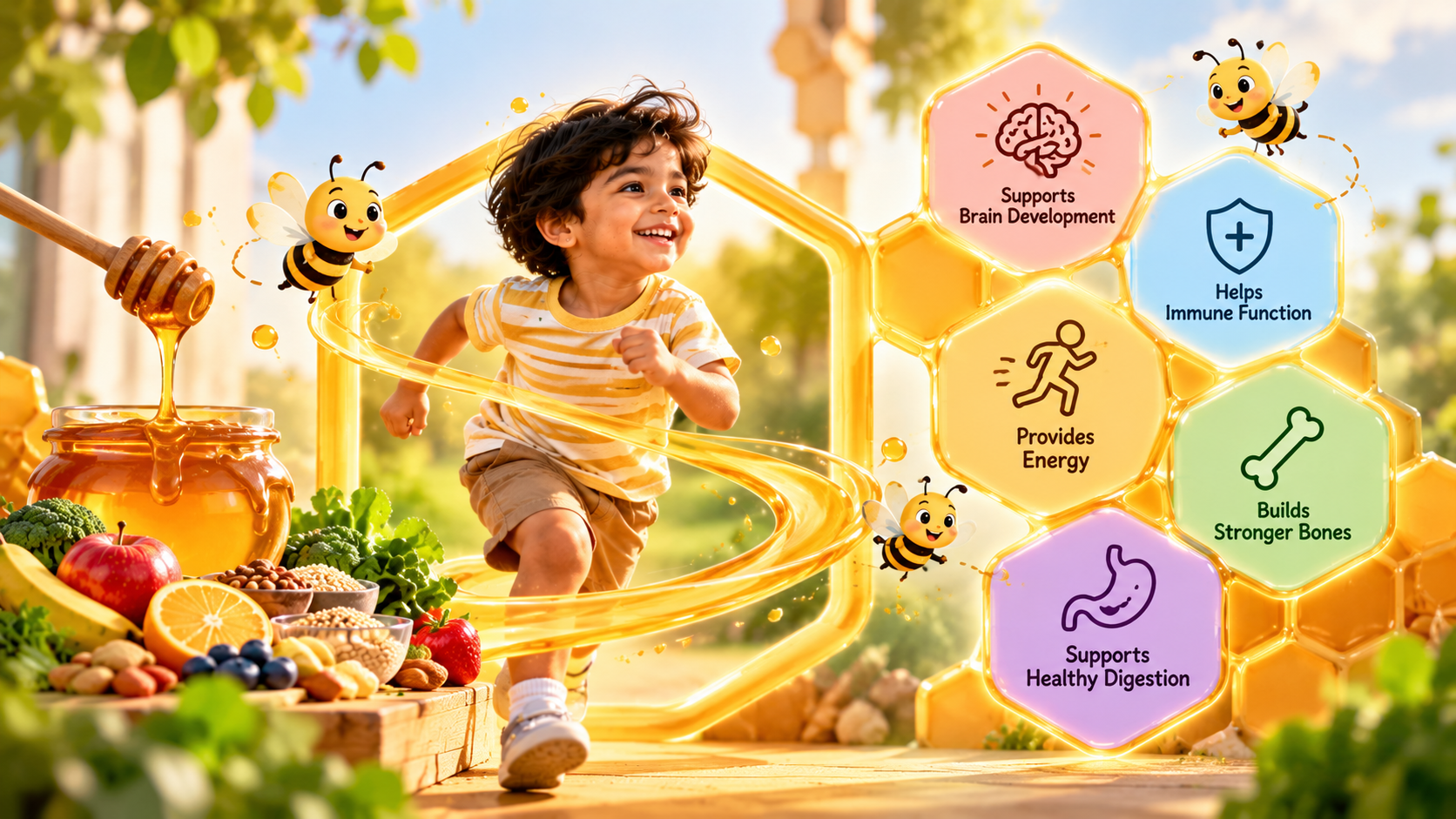
Why “My Child Looks Healthy” Doesn’t Always Tell the Whole Story
A child can look active, cheerful and perfectly healthy—and still have nutritional gaps that may not be obvious from appearance alone.
Looking Healthy Is Not the Same as Being Well Nourished
Children grow rapidly, and their nutritional needs change as they grow. Sometimes, a child may be getting enough food but not enough of certain essential nutrients needed for normal growth, immunity, brain development, bones and overall wellbeing.
Nutritional gaps can be subtle. They may not immediately show up as a visible change in weight, height or appearance.
What Parents May Not Notice
A child’s diet can sometimes lack variety, particularly when they are picky eaters or regularly avoid certain food groups. Over time, this may make it harder to obtain adequate amounts of important nutrients.
That is why a healthy-looking child still benefits from a balanced, varied and nutrient-rich diet.
Food Comes First
The foundation of childhood nutrition should always be wholesome food—fruits, vegetables, whole grains, pulses, dairy or suitable alternatives, nuts and seeds, and other nutritious foods appropriate for the child.
Where dietary gaps exist, parents can discuss their child’s nutritional needs with a qualified healthcare professional.
The Bigger Picture
Instead of asking only, “Does my child look healthy?”, it can be more useful to ask:
“Is my child getting the variety of nutrients they need for healthy growth and development?”
Because sometimes, the most important things happening inside a growing child aren’t visible from the outside.
Healthy growth begins with nourishing the whole child—not just what we can see.
